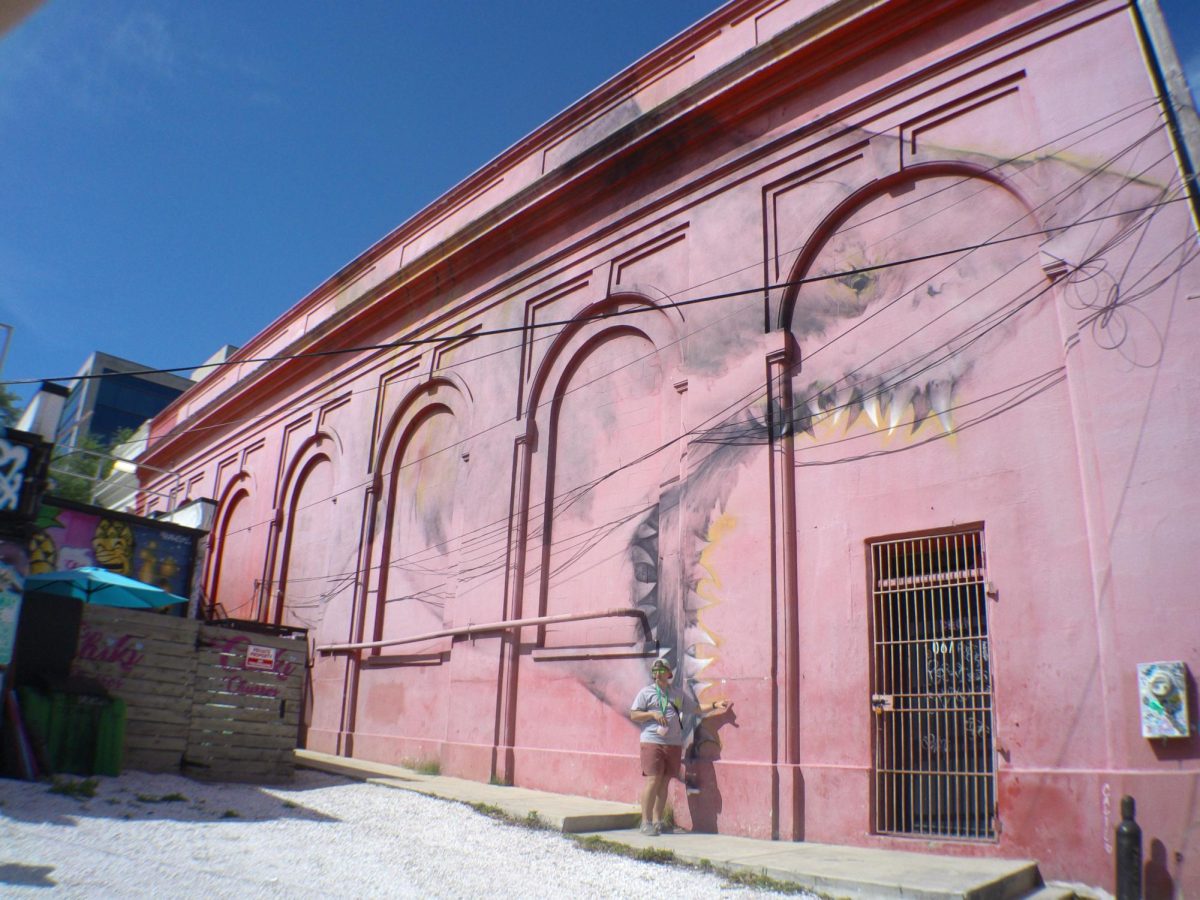
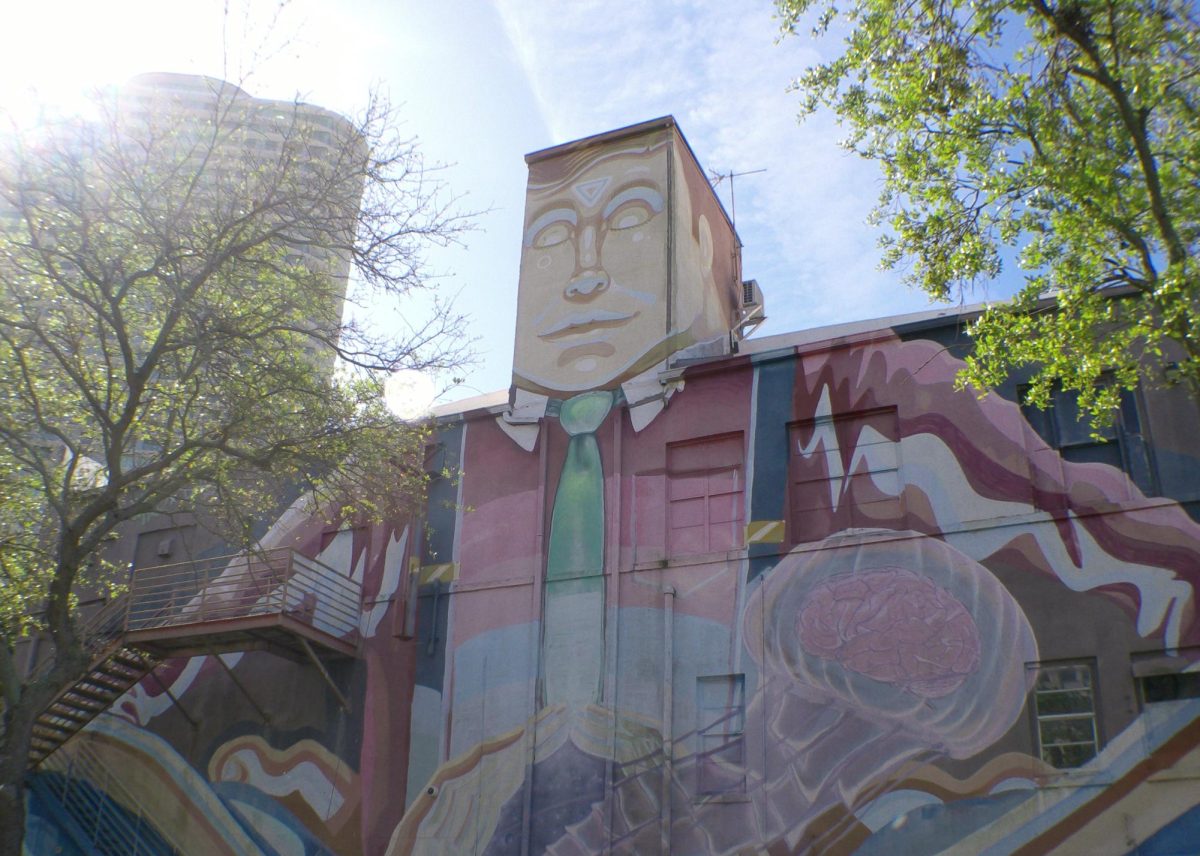
There are more than 600 murals in St. Petersburg, and each has helped shape the city into an arts destination along with internationally famous museums like the Dalí Museum and the Chihuly Collection.
Each mural reflects an artist’s individual vision and features a variety of subjects, from simple animals to detailed humans painted on huge outdoor walls. Artists use an array of tools such as rollers, spray paint, and brushes to create them.
The arts scene in St. Petersburg has an economic and social impact. According to a 2024 study from the non-profit organization Americans for the Arts, the arts have brought $682 million in benefits, support more than 11,000 jobs and producing $445 million in income. The City of St. Petersburg said that 70 percent of tourists visit just for the arts.
A guided mural tour is one way to experience public art firsthand.
Muralist James Hartzell offers walking tours organized by the Florida CraftArt gallery. On the tour, Hartzell explains each mural and the backstories behind them. He said that murals are supported by the city, businesses, and property owners.
“Muralists are able to paint murals on buildings through sponsorships. Businesses contribute a certain amount of money for murals to be painted,” Hartzell said.
The murals form connections between people and change a blank space into something worth seeing, he said.
“It is just the way it brings people together, and the way it transforms environments,” Hartzell said. “People think about their surroundings differently when they’re looking at murals. We pay attention to the walls around us.”
Artists are typically not paid for their murals, and they need permission from business owners to cover their walls. Artists get paid with publicity with their highly visible works. Bustiness owners get attention and foot traffic.
These partnerships are what separates mural art from street art, Hartzell said
“Even though you are not getting paid for a mural, if you have the right permission from the business owner or the landlord, we will consider that a mural,” he said.
Adding to the fast growth of murals throughout the city is an annual festival dedicated solely to them and the artists that paint them.
In 2015, the SHINE Mural Festival was created by Leon Bedore, also known as Tes One, for mural artists to get the supplies and spaces they need to create. The city officially sponsors the annual event, and local businesses contribute space and funding.
“It has only been possible through sponsorships, Hartzell said. “Businesses or organizations pay in a certain amount of money, depending on the square footage of the wall.
The success of the festival has resulted in a decade of fresh art. According to a report from I Love the Burg, the SHIN Festival has added more than 170 new murals to the city. Hartzell said that painting murals and guiding tours has changed his life.
“Whether it’s mural tours and interacting with locals, or people from out of country, as well as assisting painters, and painting my own murals, that’s a dream come true,” he said.
Mural culture is not restricted to just the buildings in downtown St. Petersburg.
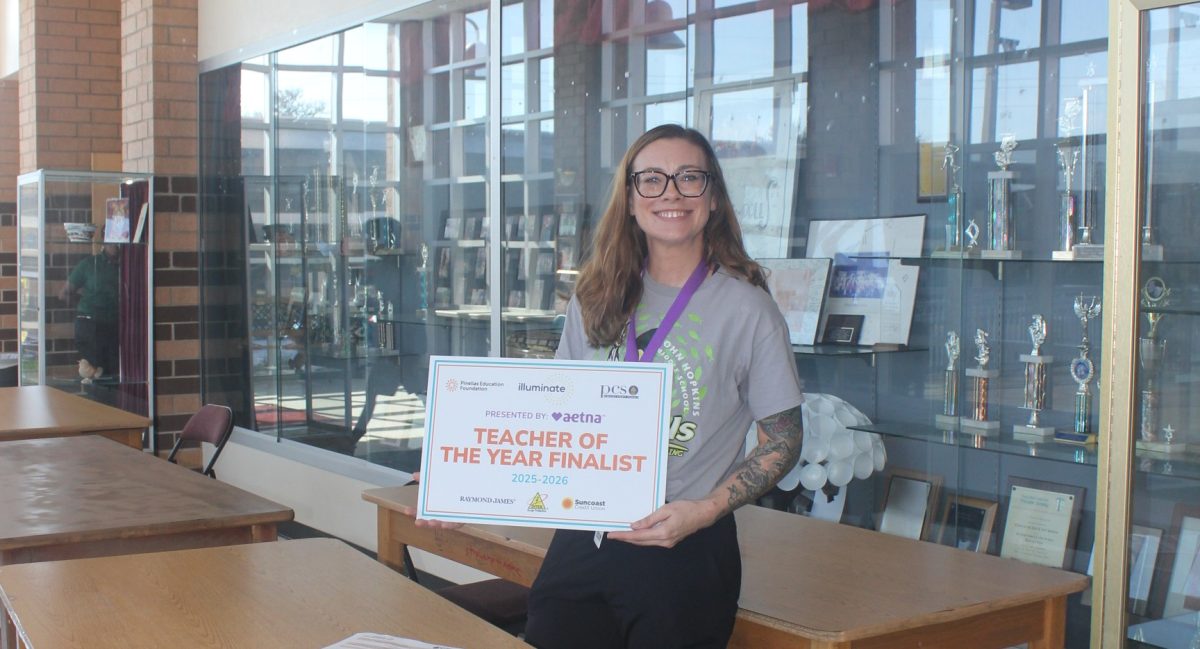
Last month, muralists – including Mize, Johnny Vitale, Zulu Painter, and Miss Crit – visited John Hopkins Middle School
to participate in the Art Battle at the annual Spring Fling. It featured a timed event where each artist created a murals from scratch.
In an interview with the JHop Times, Zulu Painter shared his affinity for murals.
“It means living in a city that celebrates creatively individual being themselves and expressing themselves and means good for the community good for the people good for the souls,” Zulu Painter said.
Miss Crit, also known as Laura Spencer, said that murals unite St. Petersburg and make the city what it is today.
“The city of St. Petersburg is known as the city of the arts. So, art is the cornerstone of all of our culture, all of our humanity,” she said. “It’s the thing that brings us all together. It’s the thing that makes us an iconic destination, whether that’s for tourism or people who want to live here all the time.”
With additional reporting from Delaney Cunha, Charlotte Lampman, Taitum Newalu, and Bryson Coleman.