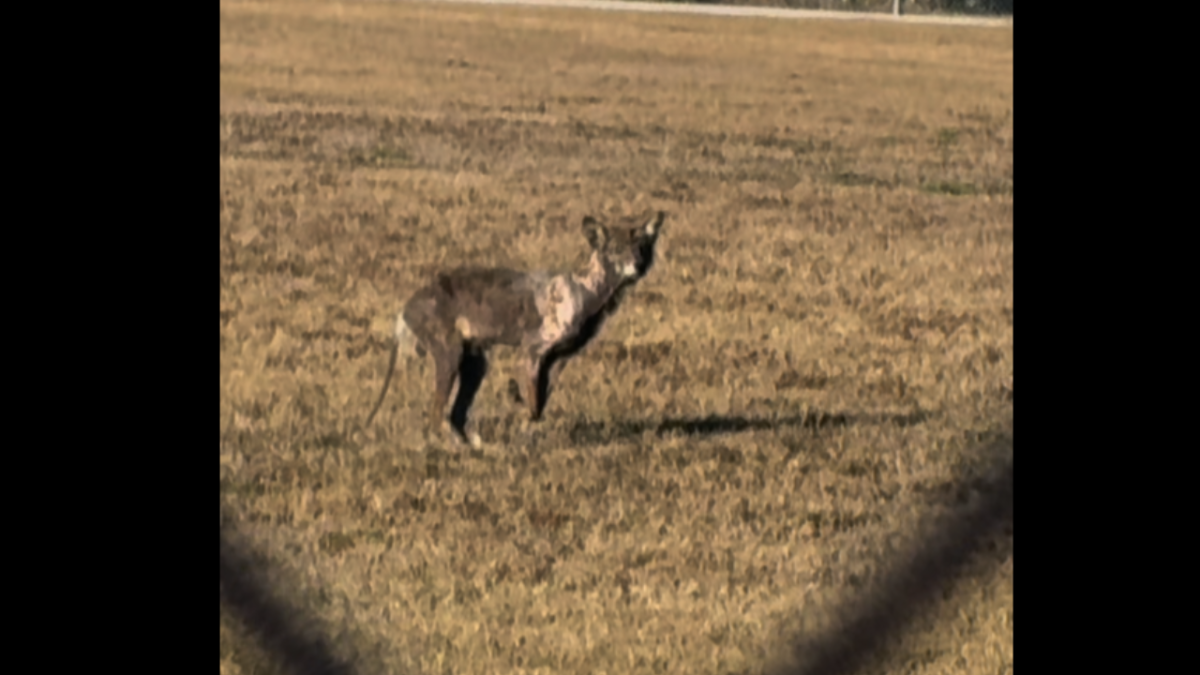
A sick and injured coyote spotted weeks ago disrupted activities at JHop.
The coyote’s presence led administrators to take to several safety steps to keep the campus safe. The principal, Ms. Brittnee Scott, first reported the animal after it was seen on the field.
School Officer Radhames Gonzalez confirmed the sighting.
“(Ms. Scott), she called me over to let me know that there was a coyote back in the field,” he said.
The coyote stayed in the area into the next morning. Because of this, students weren’t allowed on the field, and staff kept checking to make sure nothing else happened.
Additionally, staff closed the bicycle gates off 7th Avenue and moved all bikes into the school and organized them so students could find theirs at dismissal.
The Florida Fish and Wildlife Conservation Commission visited JHop and checked the field, watched for more activity, and helped administrators decide when it’s safe to reopen it.
Coyotes are social animals, but they don’t live in big packs. They stay in small family groups and usually hunt alone. Sometimes they team up with another coyote or even a badger, and they’ll follow crows to find food.
“They’re dangerous especially during the daylight,” Officer Gonzalez said. “Coyotes are more nocturnal. They can come out in the morning as well, but if a student gets bit, they can get rabies, especially if that coyote or animal has that type of disease on them.”
Students reacted differently to the situation.
Sixth-grader Andre Johnson said he heard the buzz about the coyote but didn’t see it.
“I was in class when it happened,” he said.
The field has since been reopened after an all-clear was given by the FWC.