It is holiday season at JHop, but Christmas is not the only holiday on the horizon.
Hanukkah, also known as the festival of lights, is a holiday that many students celebrate.
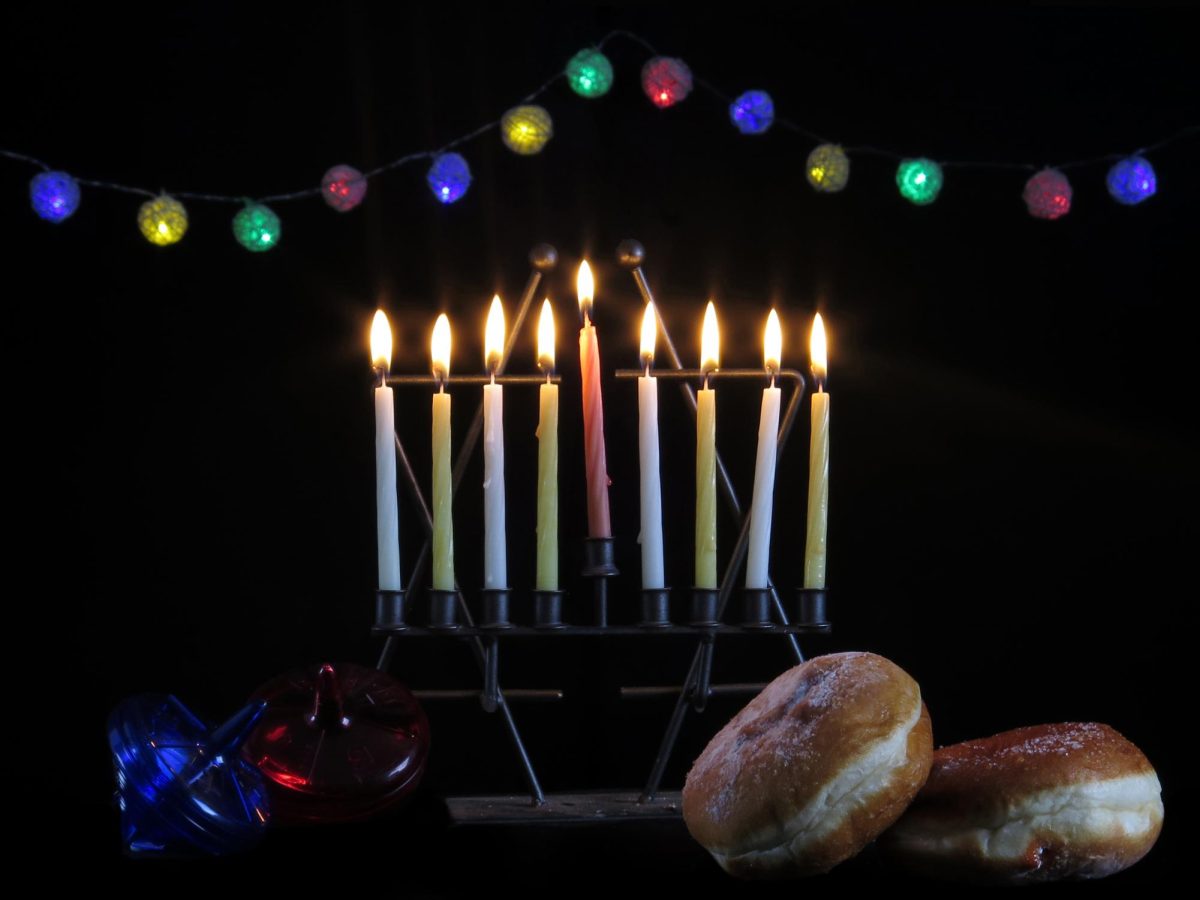
From eating the foods to lighting the hanukkiah (a nine-branched menorah), all students have their own tradition and order of it.
Hannukah lasts eight days, beginning on December 14 until December 22. The eight-day observance started from the 2nd Century, the Holy Land was ruled by the Seleucids (Syrion-Greeks), who tried to force the people of Israel to accept Greek Culture instead of the mitzvah and believing in God.
A small group of faithful but poorly armed Jews (led by Judah the Maccabee), defeated one of the mightiest Seleucid armies in the world, drove the Greeks from the land, then reclaimed the Holy Temple in Jerusalem and rededicated it to the service of God. This army then looked at the menorah (which mean candelabrum in Hebrew) and saw there was only a single cruse of olive oil that escaped contamination of the Greeks. They lit it with that supply of oil, expecting it to only burn one day, but it burned for eight days straight, therefore the eight days of Hanukkah tradition began.
Jewish students at JHop talked about what the Hanukkah celebration means to them.
“Hanukkah centers around an ancient ‘myth,’ of a miracle,” said Sarah Cowart, a sixth grader. “I would like to say that we also celebrate miracles that are happening right now, and that will happen.”
A popular tradition in Hanukkah is the dreidel, which in German means ‘spinning top.’ Its four sides are labeled with the Hebrew letters for nun, gimel, hei and shin. The dreidel game is played with chocolate coins wrapped in foil called gelt.
Nun means to take nothing. Gimel means to take everything. Hei means to take half. Shin means putting a gelt in.
The letters represent “Neis Gadol Hayah Sham,” which means “A great miracle happened there,” and it refers to the defeat of the Syrian army and rededication of the Temple. Sometimes, “shin” replaces “pey,” translating to “A great miracle happened here.”
Since this Hanukkah miracle involved oil, Hanukkah foods are fried in oil in celebration of it. Like the latke, a sort of pancake garnished with applesauce or sour cream.
“I like latkes, potato-pancakes, especially with applesauce,” said Onyx Weintraub, a seventh-grade student. “But not the unsweetened kind,”
“My favorite would probably be latkes, the way you’re supposed to have them,” Sarah said jokingly, “with applesauce.”
Another food eaten on Hanukkah would be sufganya, a jelly-filled doughnut that is deep fried in oil like the latke.
Many believe that Hanukkah is mostly about gift-giving, but some disagree.
“I feel like, like a lot of things on the internet, people may want to do something because it seems trendy or because ‘oh my gosh, I’ll probably get more gifts because it’s eight nights,’ but there’s more to Hanukkah than just the gift-giving, and gift-giving is only a small aspect,” Weintraub said.
Along with this, some students believe Hanukkah is a holiday to be shared with everyone, and not just for Jewish people.
“I don’t want people to see Hanukkah as something you don’t understand, like, I want to make sense, I want the other people to feel like they are,” open to anything I do, and, I don’t know, I just want people to feel happy Cowart said.
She also adds that she likes Hanukkah because of how inclusive it is to everyone.
“Do your research, learn about Judaism, especially if you have cultural or family relations. Anyone can celebrate it, but also it is not just a trend. It is a holiday related to a religion,” Weintraub said.